



Flora and Fauna
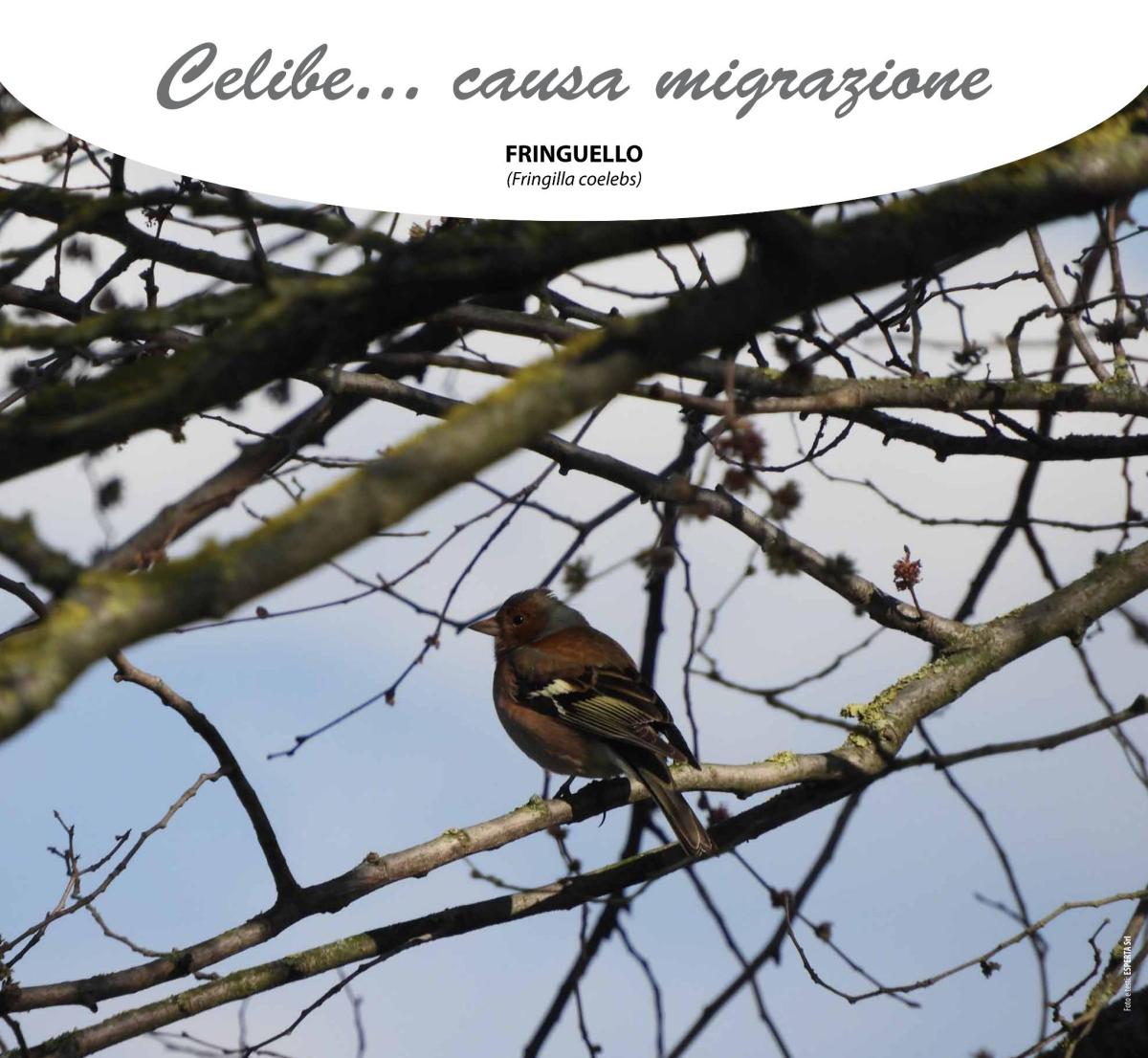
Fringuello Fringilla coelebs
Celibate... due to migration
Whether male or female, those white bands on the wings and sides of the tail make it unmistakable: it is the Chaffinch. The male is shown in the photo, while the female is more sober in appearance, with olive-brown plumage.
It is a regular visitor to the mixed woods and chestnut groves surrounding Specchio, but it is also often found in gardens and along hedgerows.
It is not uncommon to hear it before you see it: its song is one of the most characteristic of spring, a rapid, melodious sequence that ends with a kind of sonorous “slide”. In this elegant way, it marks its territory and attracts females.
But if you manage to see it, observe it carefully: it has a short, very sturdy beak, just what it needs to eat mainly seeds. Compare it with the thin beak of the blue tit, which feeds on insects and fruit! A curious fact is that its Latin name, coelebs, means “celibate”: ancient naturalists noticed that males and females tend to spend the winter apart, as if each needed its own space during the cold season. But here, in our hills, with meadows, woods and clearings in perfect balance, the chaffinch finds everything it needs all year round.
Listen to audio file:




Progetto PNRR
[M1.C3 – INVEST. 2.2 “Architettura rurale”]
NextGenerationEU - Codice CUP: E88C22000580004