



Flora and Fauna
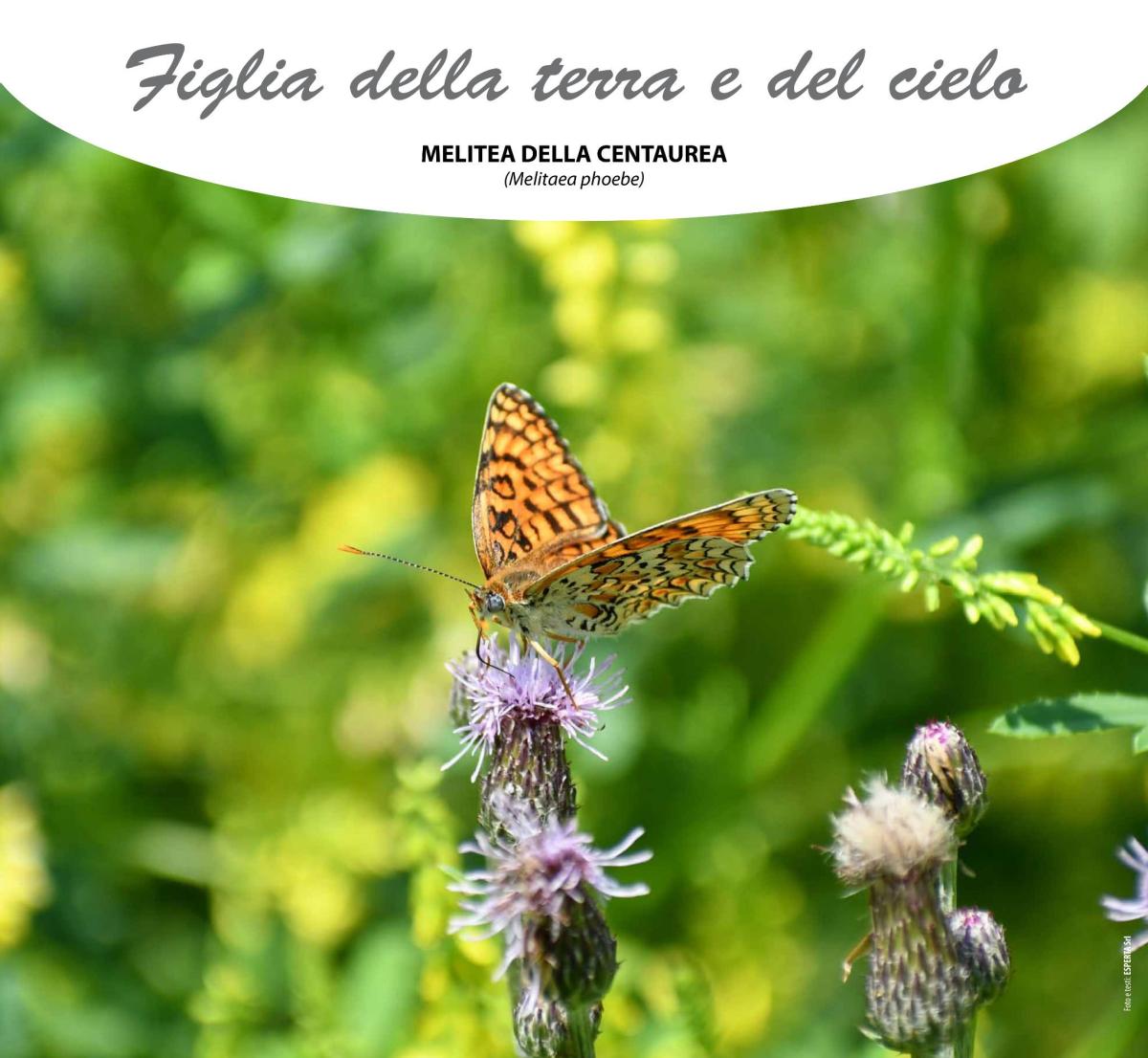
Melitea della centaurea Melitaea phoebe
Daughter of the earth and sky
Its orange wings, adorned with regular black patterns and small light spots, look like tiny mosaics that light up in the sun: it is the Melitea of the centaurea.
It loves warm, open places - meadows, clearings and forest edges - where from April to September it flies tirelessly from flower to flower, helping to pollinate wild plants. Here it finds nectar for itself and host plants for its caterpillars, such as thistles and centaurea, which are essential for their nutrition and to complete their life cycle. The presence of this butterfly is an important sign: it indicates that the environment is rich and varied, capable of supporting not only itself but many other species of plants and pollinating insects.
Seeing it flutter among the flowers is a sight that catches the eye: light, elegant, colourful... it evokes figures from Greek mythology from which it takes its name: the Nereid Melite, goddess of the sea, and the Titaness Phoebe, the moon.
Listen to audio file:




Progetto PNRR
[M1.C3 – INVEST. 2.2 “Architettura rurale”]
NextGenerationEU - Codice CUP: E88C22000580004