



Flora and Fauna
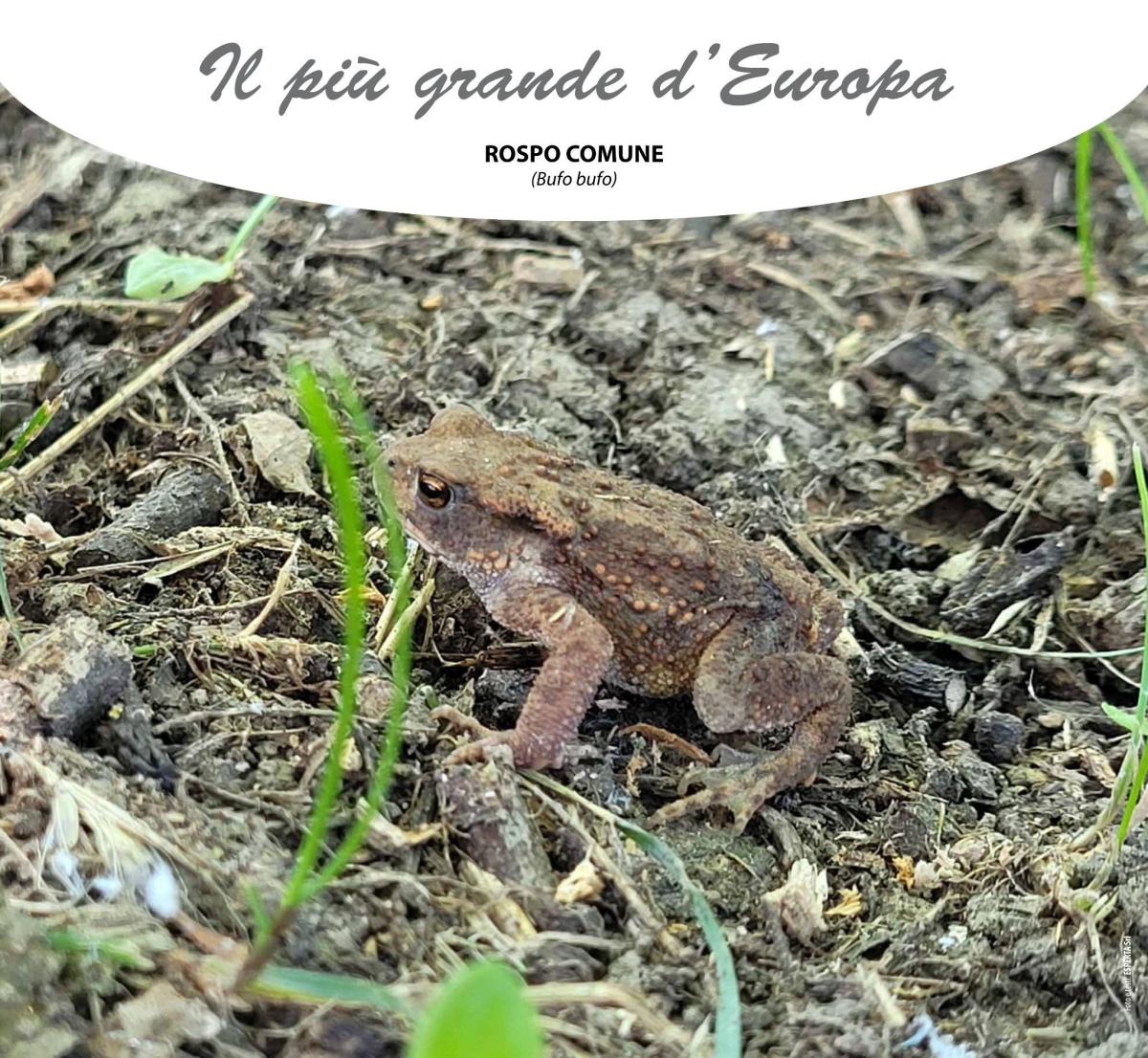
Rospo comune Bufo bufo
The largest in Europe
With a maximum length of 20 cm, it is the largest amphibian in Europe.
Stocky, warty and with unmistakable copper-coloured eyes, the common toad is one of the most difficult animals to see even during the day due to its camouflage abilities and because... it is not actually that common! It is not as agile as frogs, but moves slowly and confidently on the ground, at night or in rainy weather, leaving its shelter to prey on worms, snails, insects and even small vertebrates.
Between February and March, which mark the beginning of the breeding season, it makes small migrations to ponds, pools and watercourses for mating. Here, the females, which are up to twice the size of the males, lay several thousand eggs arranged in long gelatinous strings. They hatch after about 15 days and, within 2-3 months, the young adults migrate to the surrounding meadows and woods.
If you hear a slight rustling in the grass during an evening walk, it could be him, an important part of the biodiversity of these places.
Listen to audio file:




Progetto PNRR
[M1.C3 – INVEST. 2.2 “Architettura rurale”]
NextGenerationEU - Codice CUP: E88C22000580004