



Flora and Fauna
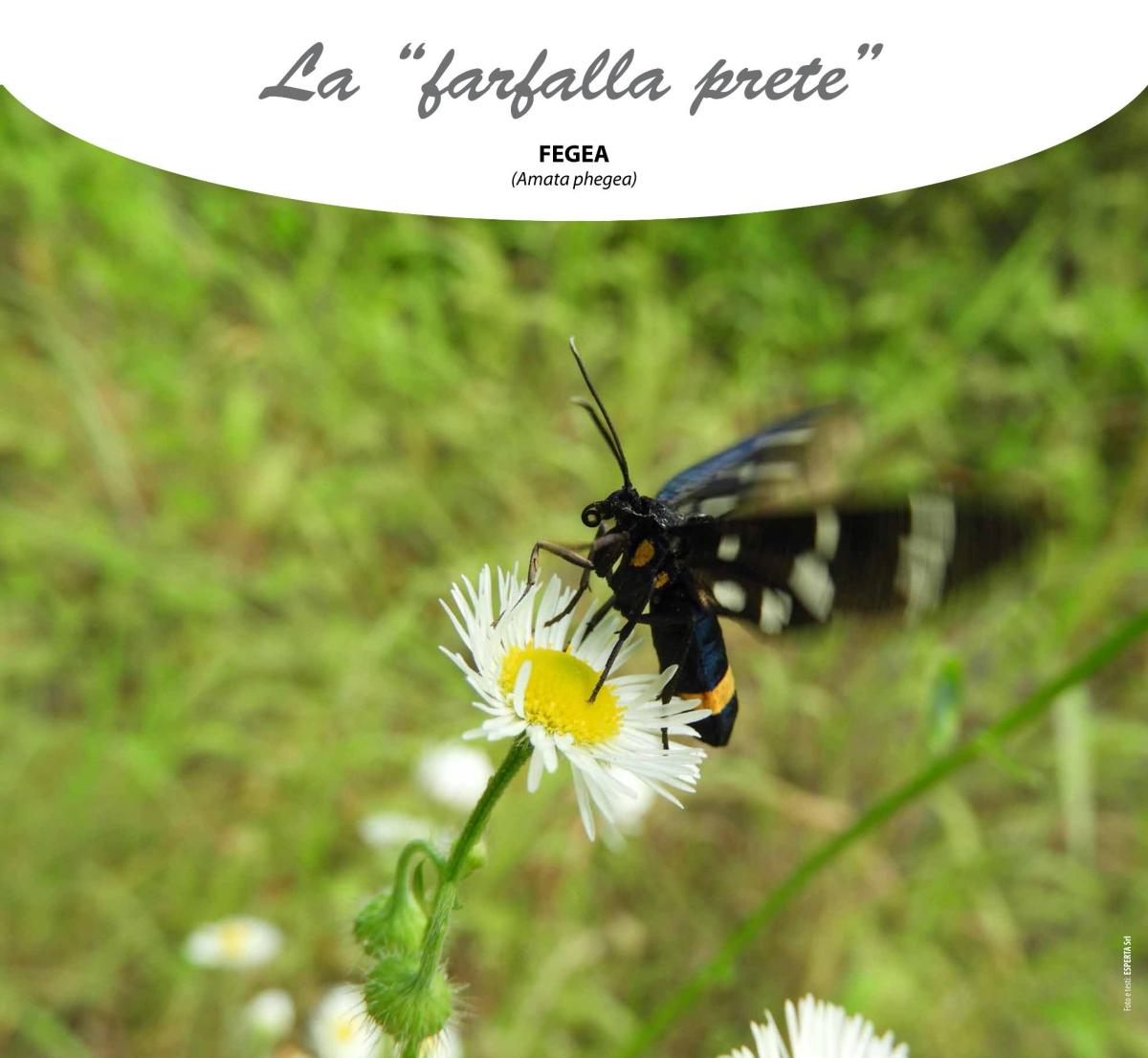
Fegea Amata phegea
The ‘priest butterfly’
Its black wings dotted with white and yellow-banded abdomen make it unmistakable: it is the Fegea – or priest – a rather common daytime moth found in uncultivated meadows and along the edges of woods...
In fact, on closer inspection, it could be confused with another daytime moth: the Zigena, which has black wings dotted with red, yellow or white and a red or yellow-banded abdomen.
This is a typical example of Müllerian mimicry and aposematism, i.e. both species - the Fegea and the Zigena - are toxic to predators, look very similar and signal their unpalatability through the bright colouring of certain parts of their bodies. This similarity reinforces the message to predators, with mutual benefit!
If you happen to spot one while walking along a path, stop for a moment to observe its elegant, irregular flight: it seems to tell us that, even in the small spaces between woods and meadows, wildlife can be surprising and colourful.
Listen to audio file:




Progetto PNRR
[M1.C3 – INVEST. 2.2 “Architettura rurale”]
NextGenerationEU - Codice CUP: E88C22000580004