



Flora and Fauna
The nemoral flora
Splashes of colour in the woods
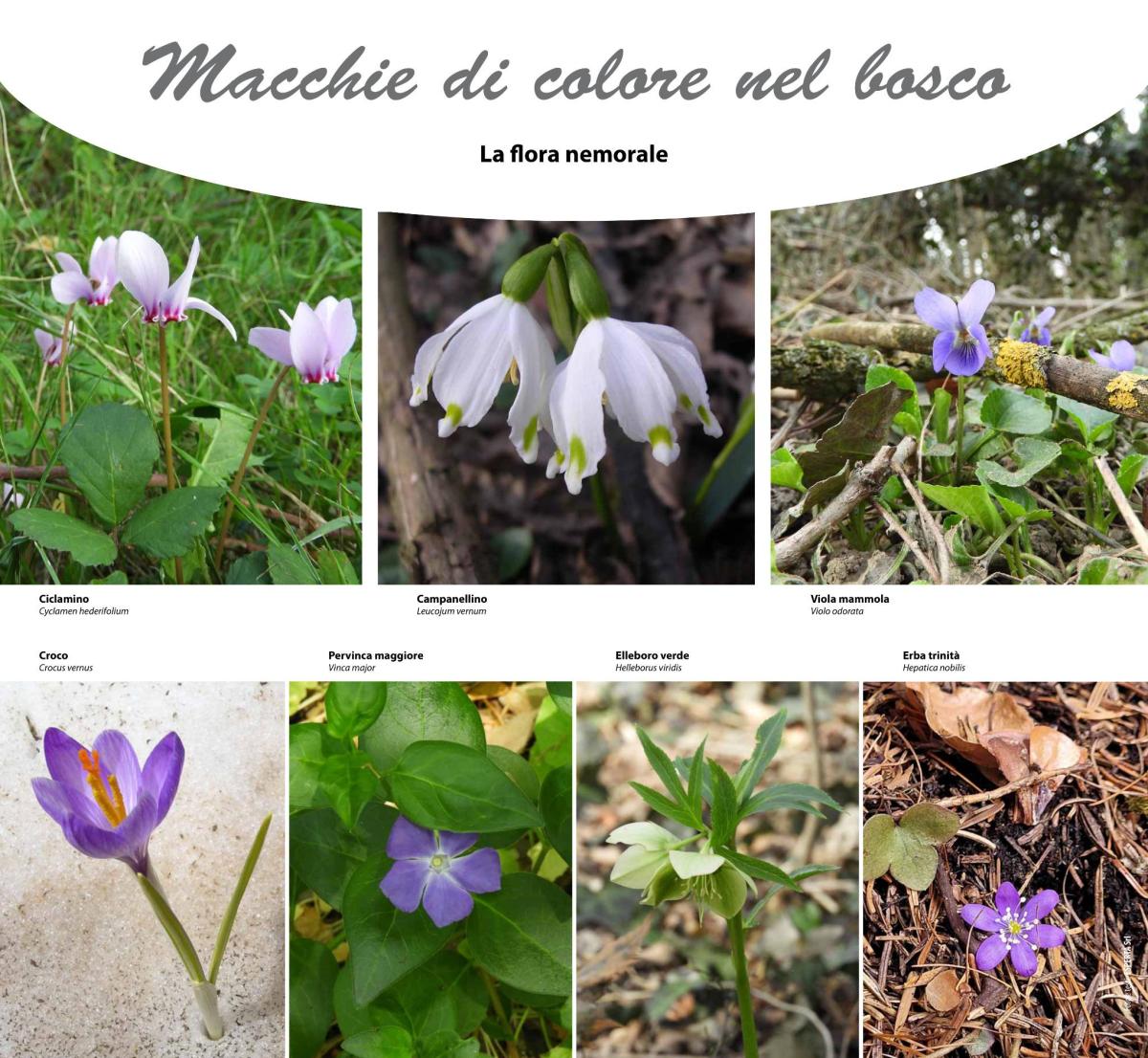
The nemoral flora is the collection of plants that live in the shade of trees, in an environment where there is little light, the air is more humid and the soil remains cool almost all year round. These plants have developed truly ingenious strategies for survival: many bloom very early, at the end of winter, when the trees are still bare and the sun's rays can filter through to the ground. Others, on the other hand, rely entirely on evergreen leaves, which remain even in the coldest months. The bluebell is one of the first flowers to appear at the end of winter, while the crocus colours the meadows at the edge of the woods when the air is still cold. Shortly afterwards, the fragrant scent of the sweet violet arrives and the shiny leaves of the Trinity herb, which loves the cool slopes of the Parma Apennines, can be seen.
In the shadier areas, you will find the evergreen and hardy Greater Periwinkle and the Hellebore, with its unmistakable green flower, one of the most typical species of our woods. In autumn, when everything seems to be resting, the cyclamen appears, with its marbled leaves and light flowers. Observing these plants means discovering how nature organises itself even where there is little light: each species has found its own time and space, creating a silent but rich mosaic.
Listen to audio file:




Progetto PNRR
[M1.C3 – INVEST. 2.2 “Architettura rurale”]
NextGenerationEU - Codice CUP: E88C22000580004