



Flora and Fauna
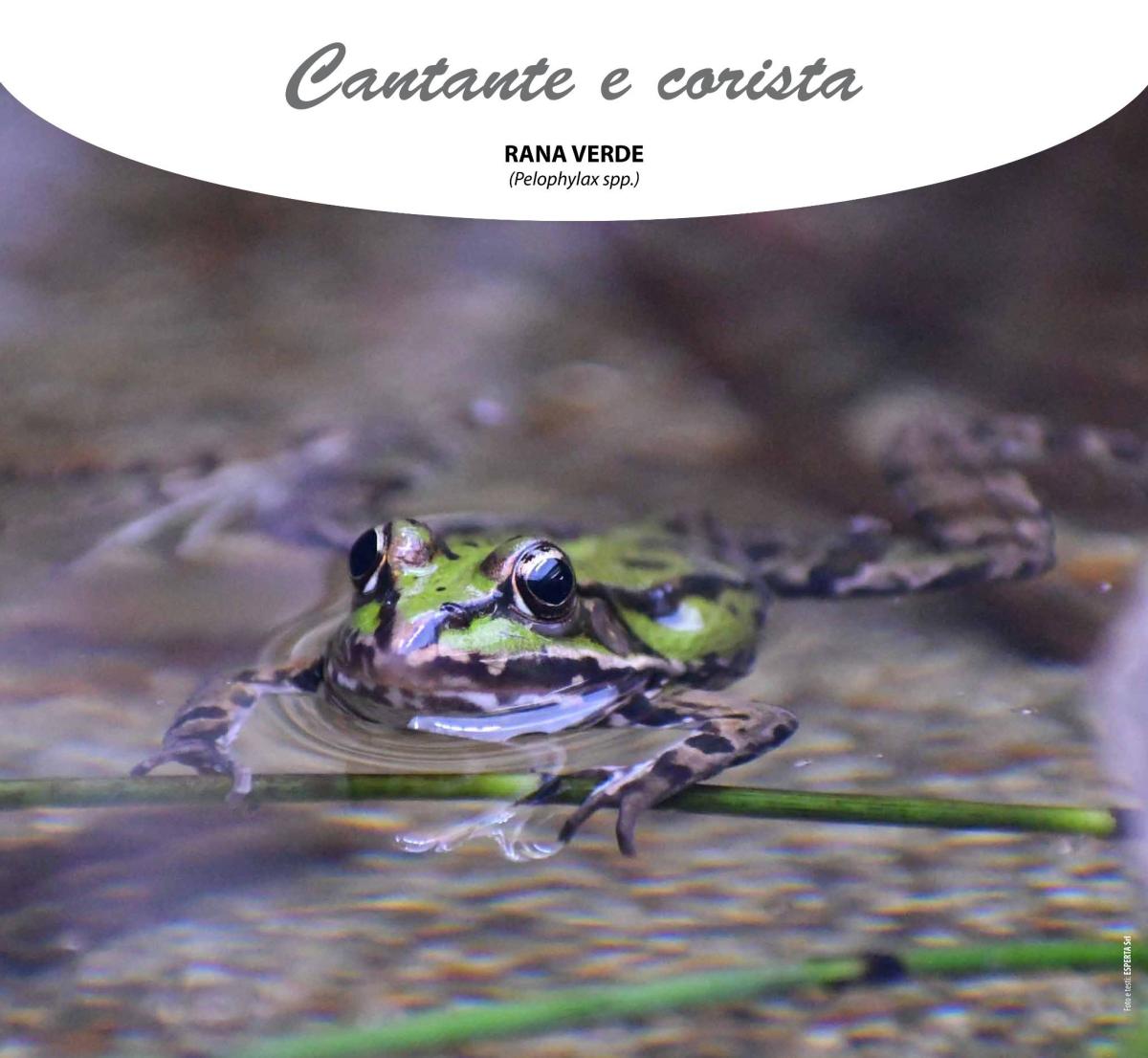
Rana verde Pelophylax spp.
Edible despite itself
The term green frogs refers to a group of three species of the genus Pelophylax, characterised by their typical green colouring and their close dependence on permanent aquatic habitats. If you happen to pass by a ditch, a pool or a quiet stretch of stream in the summer, you are almost guaranteed to hear its chorus of croaking: it is a green frog. Unlike the Dalmatian frog, which prefers the woods, you can see it along the banks of ponds and streams, well camouflaged among the vegetation or on rocks protruding from the water. In spring, males and females gather in large groups, their presence marked by a loud and continuous croaking that signals the beginning of the breeding season. The eggs are laid in floating gelatinous clusters. The larvae develop in the water, feeding on microalgae, while the adults prey on insects, spiders and other small invertebrates. Its presence enriches the biodiversity of ponds, ditches and small watercourses and provides us with valuable information on the quality of natural environments.
Listen to audio file:




Progetto PNRR
[M1.C3 – INVEST. 2.2 “Architettura rurale”]
NextGenerationEU - Codice CUP: E88C22000580004