



Flora and Fauna
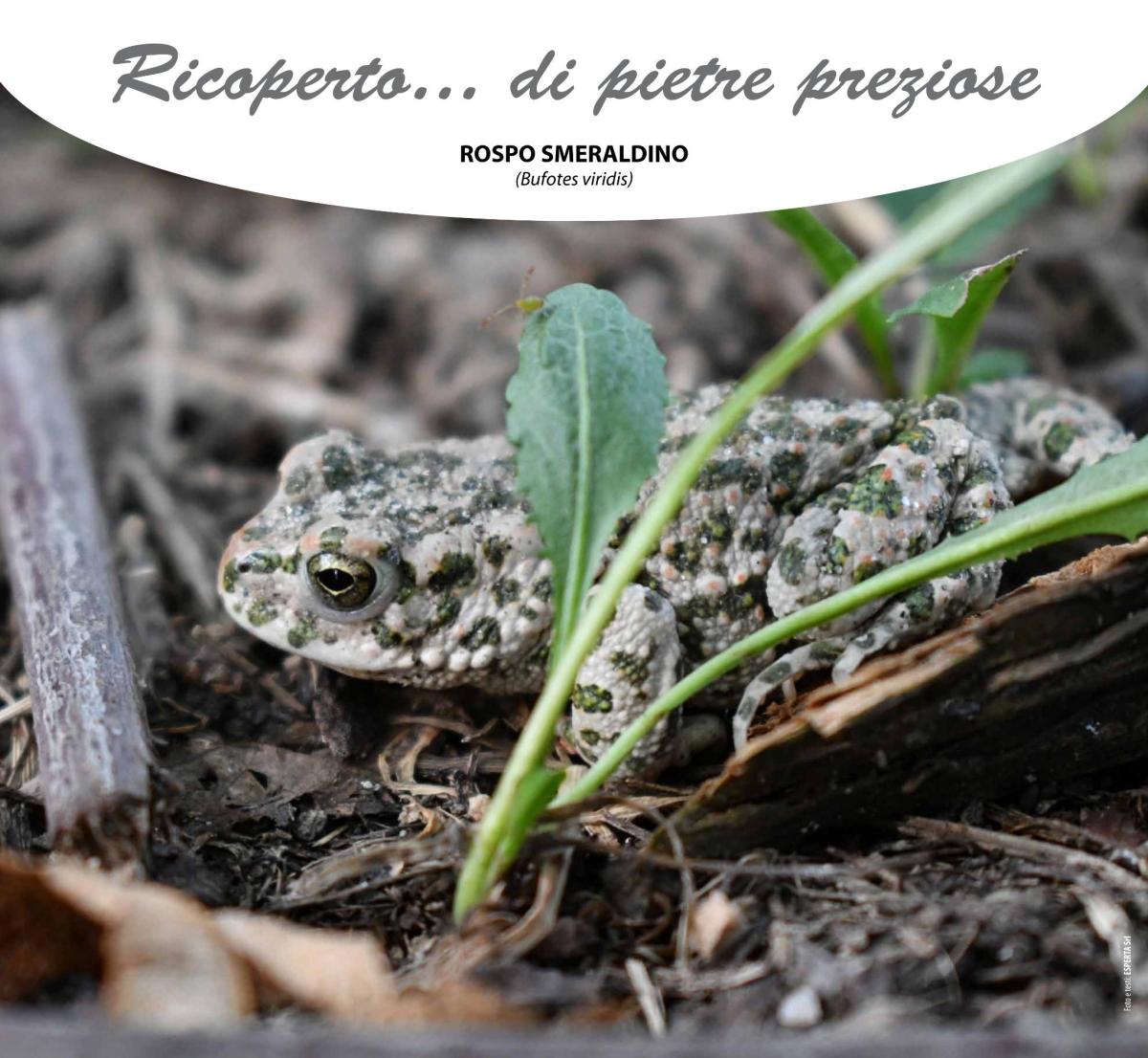
Rospo smeraldino Bufotes viridis
Covered... with precious stones
Its emerald green spotted back looks hand-painted, perfect for camouflaging itself among the lush vegetation.
Unlike the common toad, which prefers woods and damp areas, the emerald toad loves open spaces: uncultivated fields, clearings, and the edges of paths.
It is a discreet guest, but in spring it makes itself heard: its call is a high-pitched, metallic trill that echoes in the air, especially near ponds and small temporary pools.
Between March and August, the females lay thousands of eggs, arranged in long gelatinous strings... Within two months of hatching, many small emerald toads will complete their metamorphosis and leave the wetlands to move to their adult habitats. It is a very resilient species and coexists well with agricultural landscapes, where it plays an important role in controlling insect populations, even in vegetable gardens and gardens.
Its presence indicates healthy, undisturbed habitats, as this amphibian is very sensitive to pollution, habitat fragmentation and the trivialisation of natural environments.
Listen to audio file:




Progetto PNRR
[M1.C3 – INVEST. 2.2 “Architettura rurale”]
NextGenerationEU - Codice CUP: E88C22000580004