



Flora and Fauna
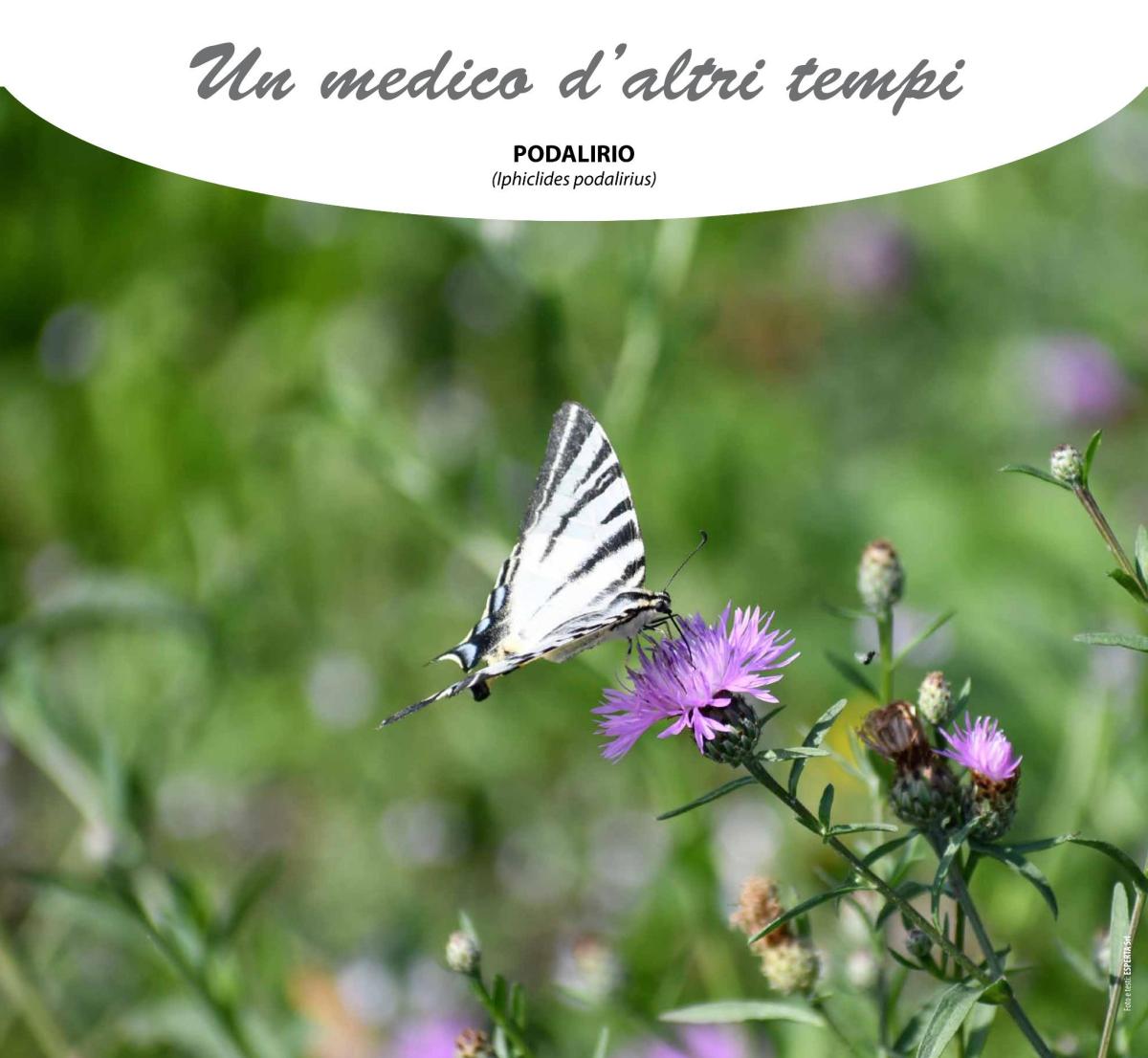
Podalirio Iphiclides podalirius
A doctor from another era
When you see it fluttering in the meadows, it looks almost like a small kite dancing in the wind, with two long, thin tails that make it instantly recognisable. It is the Podalirio, one of the most elegant and largest butterflies in Europe. It loves sunny slopes, forest edges and orchards, habitats that are certainly not lacking in these parts.
Its name comes from a doctor - son of Asclepius, the Greek god of medicine - who, with his brother Machaon (also the name of a beautiful butterfly), treated the wounded during the Trojan War.
Its caterpillars – a masterpiece of camouflage – feed mainly on blackthorn and hawthorn bushes: they are bright green with thin yellow lines and, when threatened, they extend two small orange appendages that release foul-smelling substances to ward off predators.
The podalirius is another sign of the rich biodiversity of the Taro and Ceno valleys: a varied environment with meadows, cultivated fields, hedges and woods that offer everything this butterfly needs.
Listen to audio file:





Progetto PNRR
[M1.C3 – INVEST. 2.2 “Architettura rurale”]
NextGenerationEU - Codice CUP: E88C22000580004